phyelds
phyelds is a lightweight, pythonic toolkit for aggregate computing: you write one program that describes the behaviour of a whole collective (a swarm of robots, a sensor network, a fleet of devices), and every device runs it, exchanging values only with its neighbors.
pip install phyelds             # core library and simulator
pip install "phyelds[jupyter]"  # optional: live rendering inside Jupyter
pip install phyelds-vmas        # optional: VMAS multi-robot integration
phyelds requires Python 3.12 or later.
Where to start
- Playground: write and run aggregate programs in your browser, with nothing to install.
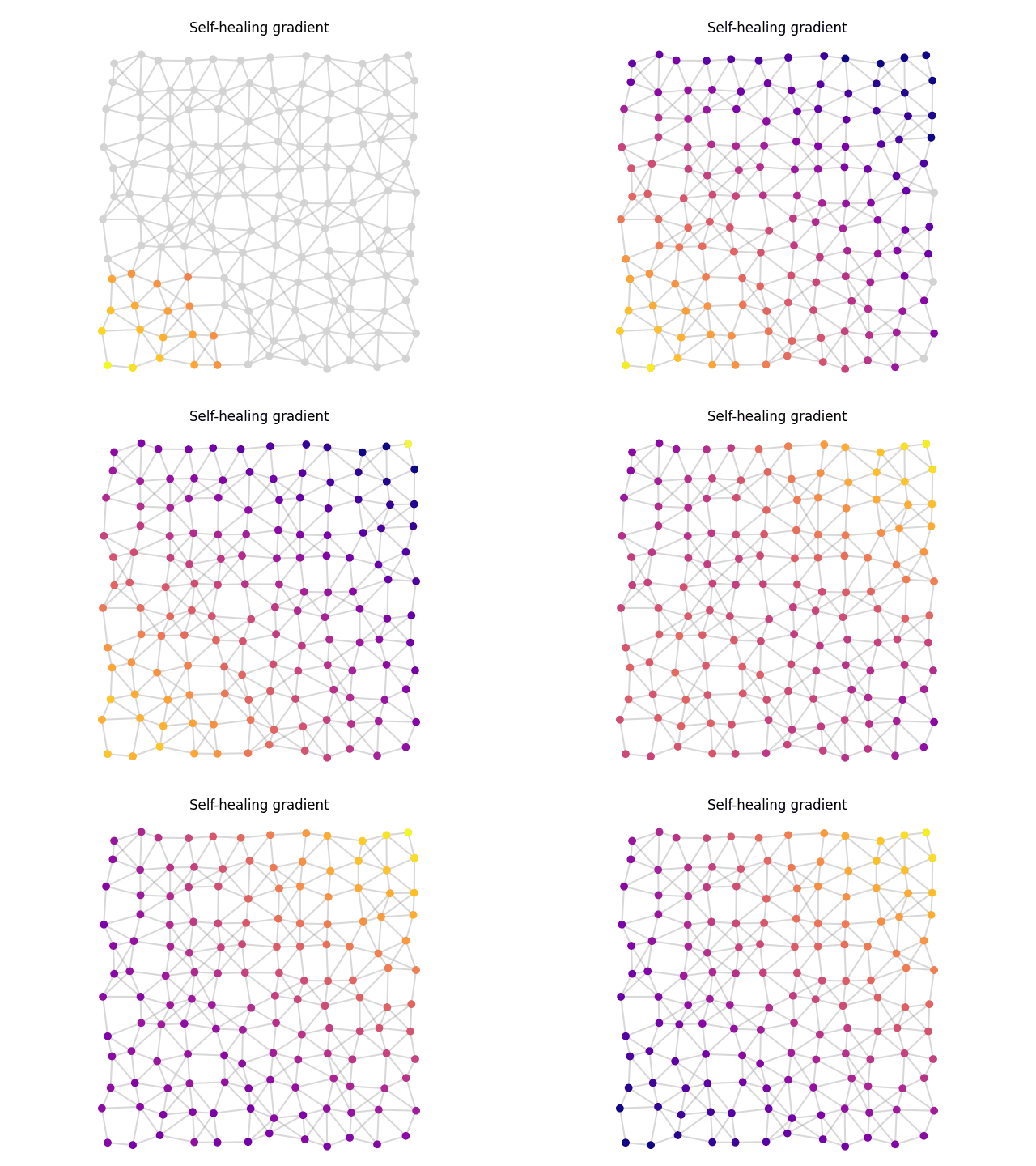
- Tutorial: build the gradient, the "hello world" of aggregate computing, step by step, and watch it converge and heal.
- Concepts: fields, rounds,
remember,neighbors, alignment, and the bundled libraries. - Simulator: deployments, neighborhoods, monitors, animations and CSV export.
- Integration: run phyelds programs inside your own simulator, robot, or runtime.
- Pitfalls: what not to do, each with a fix.
- API reference: generated from the docstrings.
A taste
from phyelds.calculus import aggregate, neighbors, remember

@aggregate
def hop_gradient(source: bool) -> float:
    set_distance, distance = remember(float("inf"))
    through_neighbors = neighbors(distance) + 1
    nearest = min(through_neighbors.exclude_self().values(), default=float("inf"))
    set_distance(0 if source else nearest)
    return distance
Every device runs these few lines; together, they compute the distance of every device from the nearest source, and keep it correct while the network changes.